Juris Putrāms
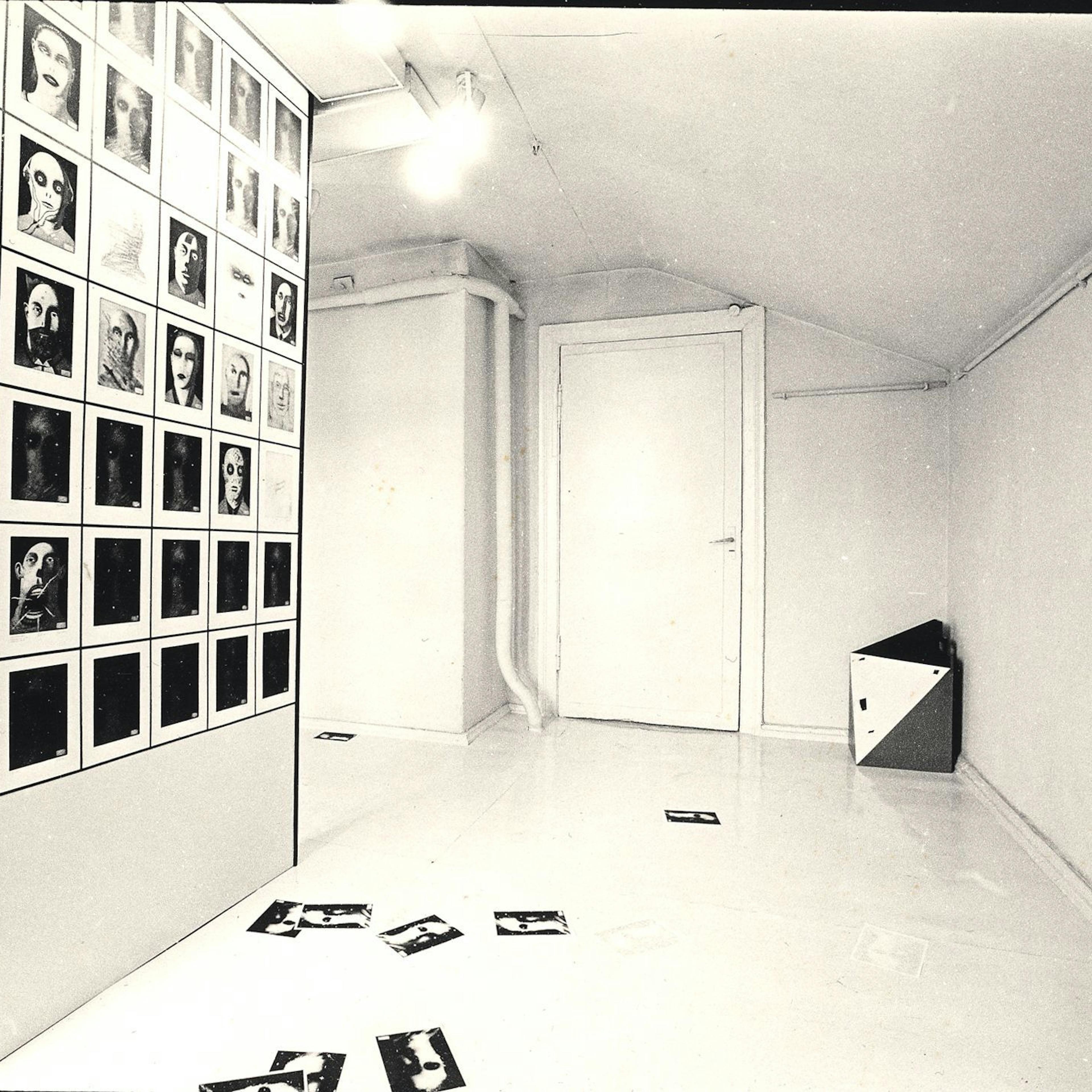
Juris Putrāms was one of the central figures in the “boundary breaker” generation of the National Awakening period. The acquired installation is legendary. It is a miracle that it has survived and can be reconstructed. The installation was created during the perestroika period, when although “openness” (glastnost)” had begun, the censors continued to check the content of exhibitions before they opened. The exhibition by Breže/ Putrāms/ Pētersons at the Gustavs Šķilters Memorial Museum in 1985 at which this work by Putrāms was displayed was banned.
The structure of the installation is a synthesis of Soviet constructivist and functionalist influences and also includes 24 sheets of etchings with imaginary, grotesque and occasionally monstrous portraits of passersby. The image of the passerby encapsulates a socially critical note as well as the artist’s idea of the need for communication and the difficulties it entails. Putrāms’ works should always be considered in a broader context. Although they are characterised by a declarative literalism, the seemingly clear narrative in Putrāms’ works often escapes from one’s grasp.
Installation “Passersby“. 1985.